Science & Skepticism
The Experimenter Effect: The Variable Science Can't Delete
By Keigan Cullen · September 24, 2026
Quick Summary
The experimenter effect (often called experimenter bias) is when a researcher's expectations, beliefs, or behavior change the outcome of their own study. Classic examples include Clever Hans, the “math horse” who was actually reading his questioners' body language, and Robert Rosenthal's 1963 rat study, where students got better maze results from rats they were told were “bright.” Science handles the problem with blinding and standardized protocols. Parapsychology pushes it further: in a series of staring studies, a believer and a skeptic ran the same protocol in the same lab and got different results. That raises a question science still can't fully answer. What happens when the thing you're studying is intention itself?

Table of Contents
What if scientists are quietly influencing the results of their own experiments? And what if, at least sometimes, the influence doesn't run through anything we'd recognize as a normal channel?
Picture two researchers. Same lab, same equipment, same protocol, participants drawn from the same pool. One is a skeptic of psychic phenomena, the other is a believer. The believer's participants show an effect. The skeptic's don't. That's a real, published study, and it sits at the far end of a problem science has been trying to get rid of for about 400 years: the experimenter effect.
There's an old line, often attributed to Henry Ford: “Whether you think you can, or you think you can't, you're right.” (The attribution is shaky. The earliest strong match Quote Investigator found is a Reader's Digest item from 1947, printed a few months after Ford died.) You usually see it on motivational posters. This article asks a stranger question. What if it's also, in some small and measurable way, a lab result?
Background: The Dream of a Science Without Humans
In 1641, René Descartes published his Meditations on First Philosophy and split reality in two. On one side was res cogitans, the thinking mind. On the other was res extensa, extended physical matter. Mind over here, matter over there. Descartes (the “I think, therefore I am” guy, from his earlier Discourse on Method) was one of the central figures of the scientific revolution, and this split did a lot of useful work. If mind and matter are separate, you can study matter without your mind getting in the way. That's the promise of objectivity.
Francis Bacon, often called the father of the scientific method, was building the practical toolkit around the same time. In the Novum Organum (1620) he argued for observing, experimenting, and building knowledge up from data. He also thought human perception was corrupted from the start by what he called the “idols of the mind”:
- Idols of the Tribe: distortions we inherit as a species, like seeing more patterns than are really there and believing what we want to be true.
- Idols of the Cave: quirks of the individual, shaped by upbringing and temperament.
- Idols of the Marketplace: the shortcomings of language itself.
- Idols of the Theatre: inherited dogmas and philosophical systems accepted without question.
Bacon's fix was to clear them all out. Knowledge advances by taking as much of the human out of the problem as you can.
That ideal never went away. Historians Lorraine Daston and Peter Galison, in their book Objectivity (2007), trace how a version of it took hold in the mid-19th century. They call it “mechanical objectivity”: let the instrument, the recorder, the photograph speak for nature, and keep the scientist's hand out of it as much as possible. Their argument is that this ideal is still with us.
It's a lovely dream. Truth, finally, without the mess of human hopes and biases. The trouble is that the human won't leave the room.
Methodology: How the Human Keeps Getting Back In
Clever Hans, the Horse Who Did Math (Sort Of)
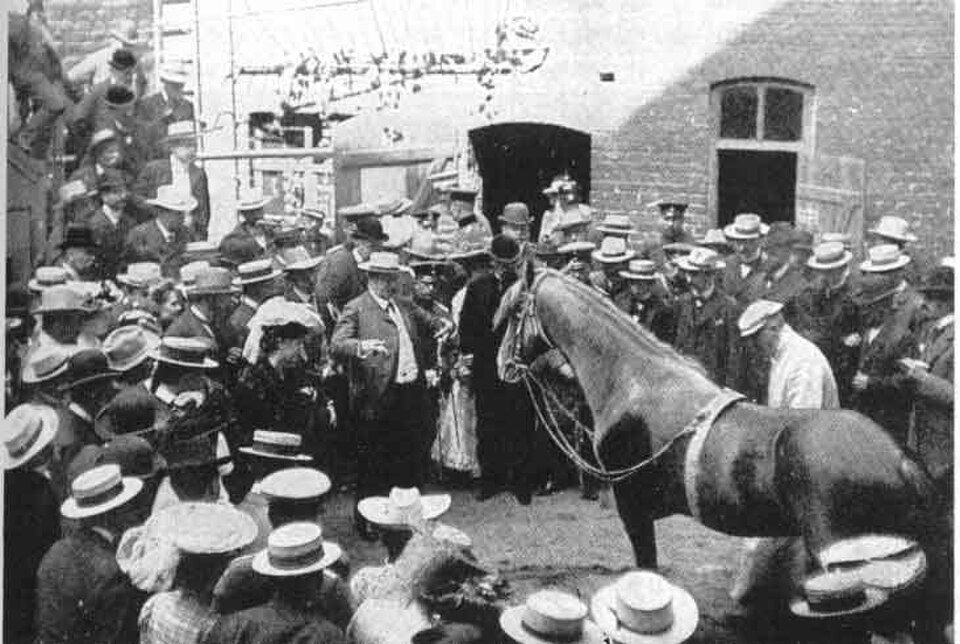
In early-1900s Berlin, crowds gathered to watch a horse named Hans answer arithmetic problems by tapping out the answer with his hoof. A commission looked into it and found no trickery. Then, in 1907, psychologist Oskar Pfungst ran a proper set of tests.
He changed who asked the questions. He used blinders so Hans couldn't always see the questioner. He had people ask questions they didn't know the answer to themselves. What he found was that Hans could answer correctly even when his owner wasn't around, which ruled out fraud, but only when the questioner knew the answer and Hans could see them. With the questioner in view, Hans got about 89% right (50 of 56). Without that view, he got about 6% (2 of 35).
Hans was reading tiny, involuntary cues: a slight lean forward when he started tapping, a small release of tension when he hit the right number. The people around him were leaking the answer without knowing it. The observer was the source of the signal.
My favorite detail: once Pfungst understood the cues, he found he kept producing them himself, whether he wanted to or not. Knowing about the bias didn't switch it off. (For the record, I still think Hans was a smart horse. Reading a human that closely is its own kind of genius.)
Rosenthal's “Bright” and “Dull” Rats
In 1963, Robert Rosenthal and Kermit Fode (affiliated with Harvard and the University of North Dakota) ran a now-classic study. Student experimenters were each given a group of five ordinary lab rats. Some were told their rats had been bred “maze-bright.” Others were told theirs were “maze-dull.” The labels were random. The rats were the same.
The “bright” rats learned the maze faster.
Nothing about the rats explained it. The difference was in what the students believed, and that belief seems to have leaked into how they handled, timed, and treated the animals. (Rosenthal & Fode, 1963) Rosenthal went on to study the same kind of expectation effect in classrooms, which is where the related term “Pygmalion effect” comes from.
The Placebo's Cousin
Most people know the placebo effect: a sugar pill you believe is medicine can make you feel better. The experimenter effect is its cousin. The difference is direction. A placebo works on your own body. The experimenter effect works on a system outside you, whether that's a horse, a rat, a participant, or a dataset. The belief reaches outward instead of inward.
Blinding: Science's Quiet Confession
This is why modern research uses double-blind designs, where neither the participant nor the person running the session knows who's in which condition. Blinding is one of science's best tools, and it works. It's also a kind of admission. We build it because we already know that what a researcher believes can change what a system does.
Results: The Believer, the Skeptic, and the Staring Studies
Standard methods work well when you're trying to keep belief out of a study. But what happens when the thing you're studying is intention itself?
You can't run an experiment without an experimenter, and the experimenter can't be intentionless, or they wouldn't be running the experiment. If intention is what you're measuring, you can't fully blind it away. That's a different kind of scientific problem.
Two Researchers, One Question
Richard Wiseman is a psychologist and a well-known skeptic of psychic phenomena. Marilyn Schlitz is a researcher who accepts that psi is real. Both had run experiments on a very common experience: the feeling of being stared at.
The setup measured electrodermal activity (tiny changes in skin conductance) in a participant sitting alone in one room, while an experimenter watched them on a closed-circuit monitor from another room. The staring periods and non-staring periods were randomly ordered, and the participant didn't know which was which. If people unconsciously register being watched, their skin activity should shift during the staring periods.
Wiseman's earlier studies found nothing. Schlitz's found a significant effect.
Here's what I love about what they did next. Instead of arguing past each other, they ran the experiment together. They used the same location, the same equipment and procedures, and drew participants from the same subject pool. Each of them ran half the sessions. About the only variable left was the experimenter.
The result (1997): Schlitz's participants showed significantly more activation during staring periods than non-staring periods. Wiseman's showed no significant effect. (Wiseman & Schlitz, 1997, Journal of Parapsychology)
The second run (1999): They tried again, and Schlitz's participants again showed a significant result, though it's unclear whether the pattern ran in the same direction as before. This one was presented as a conference paper rather than a journal article. (Wiseman & Schlitz, 1999.)
The third study (2006): They teamed up with Caroline Watt and Dean Radin for a tighter design that separated the roles of “experimenter” and “starer.” This time, nobody found an effect. Not the believer, not the skeptic. (Schlitz, Wiseman, Watt & Radin, 2006, British Journal of Psychology)
So the effect showed up twice under careful protocols, and then disappeared. To me, that doesn't settle whether it exists. It shows why this field is so fascinating. Whatever this is, it's elusive, and nobody in the room, skeptic or believer, can fully say why it appears in some runs and not others.
Criticism: What Skeptics Point Out
A fair reading of these studies has to include the strongest objections, and there are good ones.
The head-to-head difference wasn't significant. In the 1997 study, Schlitz's participants showed a significant effect and Wiseman's didn't. But when the two groups were compared directly, the difference between them didn't reach statistical significance. That matters. “Her results were significant and his weren't” is not the same claim as “her results were significantly different from his.”
The biggest, tightest study found nothing. The 2006 study had the largest sample and the most controlled design of the three, and it came back null for everyone. A skeptic can reasonably say the earlier positives were chance findings or subtle artifacts, and the best-designed study shows what's really there: no staring effect.
The second study is ambiguous. The 1999 run was a conference paper, and the direction of its effect isn't clear. That makes it weaker support than a clean journal replication.
Ordinary explanations come first. The mainstream experimenter effect (Clever Hans, Rosenthal) runs through normal channels like body language, tone, and handling. Before reaching for anything unusual, you have to rule out that the believer simply put participants at ease, or ran sessions a little differently. Parapsychologists take this seriously too. Reviews of the field note that experimenters who come across as warm and enthusiastic tend to get better results, which could be a purely psychological effect.
Skepticism plays an important role here. Many researchers approach these findings with cautious curiosity rather than acceptance or dismissal, and that's the right posture. The honest summary is that a believer and a skeptic ran a sound protocol together, got a pattern twice, and then lost it.
Interpretation Models: The Paradox Nobody Can Walk Out Of
Here's where it gets strange. Let's call the possible effect “psychic bias”: an experimenter's belief influencing a physical outcome through some non-physical route. And let's call ordinary problems with the protocol (leaky cues, sloppy randomization, and so on) “mundane bias.”
Now try to draw a conclusion from the positive results. There are four ways to slice it:
- Psychic bias is real, and the experiment is sound (free of mundane bias).
- Psychic bias is real, and the experiment has mundane bias.
- Psychic bias isn't real, and the experiment is sound.
- Psychic bias isn't real, and the experiment has mundane bias.
Options 2 and 4 are the easy ones. If the protocol had mundane bias, we can't trust any of the results, positive or null. Back to the drawing board.
Option 1 eats itself. The protocol was sound, so we accept the results, and the results say the experimenter's belief shaped the outcome. But if belief can shape the outcome, then the protocol was exposed to a bias it couldn't block. So it wasn't sound after all.
Option 3 eats itself too. The protocol was sound and psychic bias isn't real, so we should accept whatever the data shows. But the data showed positive results, which point toward psychic bias. Which means the protocol, and in principle every protocol, may never have been as sealed as we assumed.
Boiled down: if you accept the positive results, you undercut the idea of an observer-proof experiment. If you trust the experiment, you're obligated to take the positive results seriously.

How Each Camp Gets Out (and Why Neither Exit Settles It)
Each side does have a way out, and it's worth being fair about both.
The skeptic's exit: the positive results were never real evidence in the first place. They were chance findings or undetected artifacts, and the 2006 null is the true picture. This is a legitimate reading, and the authors of the 2006 paper named it as one of two possibilities.
The proponent's exit: the effect was real, and something in the third study disrupted it. Parapsychologist John Palmer points out that in the 2006 design, Wiseman had a role in the sessions Schlitz ran. If you assume his negative expectation canceled out her positive one, an “experimenter psi” model explains all three studies at once. (Palmer, Psi Encyclopedia, 2017.)
Notice what just happened. Both camps can absorb the null result into their own model. The skeptic says “see, nothing there.” The proponent says “see, the skeptic's influence was in the room.” The data alone can't decide between them yet.
So the only conclusion we can honestly draw is that we're missing information. Some variable isn't being measured. It's still a mystery, and that's worth sitting with.
Why It Matters Today
From a scientific perspective, these studies point at something we can't currently account for. That alone warrants more investigation. They also raise questions that reach well beyond parapsychology:
- Why did the results come out positive in some runs and null in others under closely matched conditions?
- Is psychic bias (if it exists) a different kind of thing from ordinary bias, or the same thing through a channel we don't understand yet?
- Does science have the right tools to study the effects of belief and intention?
- If we took psychic bias seriously as a possibility, how would we need to rethink “objective” results?
I suspect this is part of why many researchers avoid the topic. It asks us to rethink the ground we stand on. But it's worth saying clearly: none of the discoveries made through the scientific method disappear. That's how science, and physics especially, has always moved. Someone finds an anomaly, and eventually a more complete framework makes room for it. Newtonian mechanics still builds bridges, even after Einstein.
When you look at the peer-reviewed parapsychology literature, in many cases we genuinely can't say psychic phenomena are real. We can't say they aren't, either. What we can say is that some results don't fit the current framework, and that's exactly where the interesting science lives.
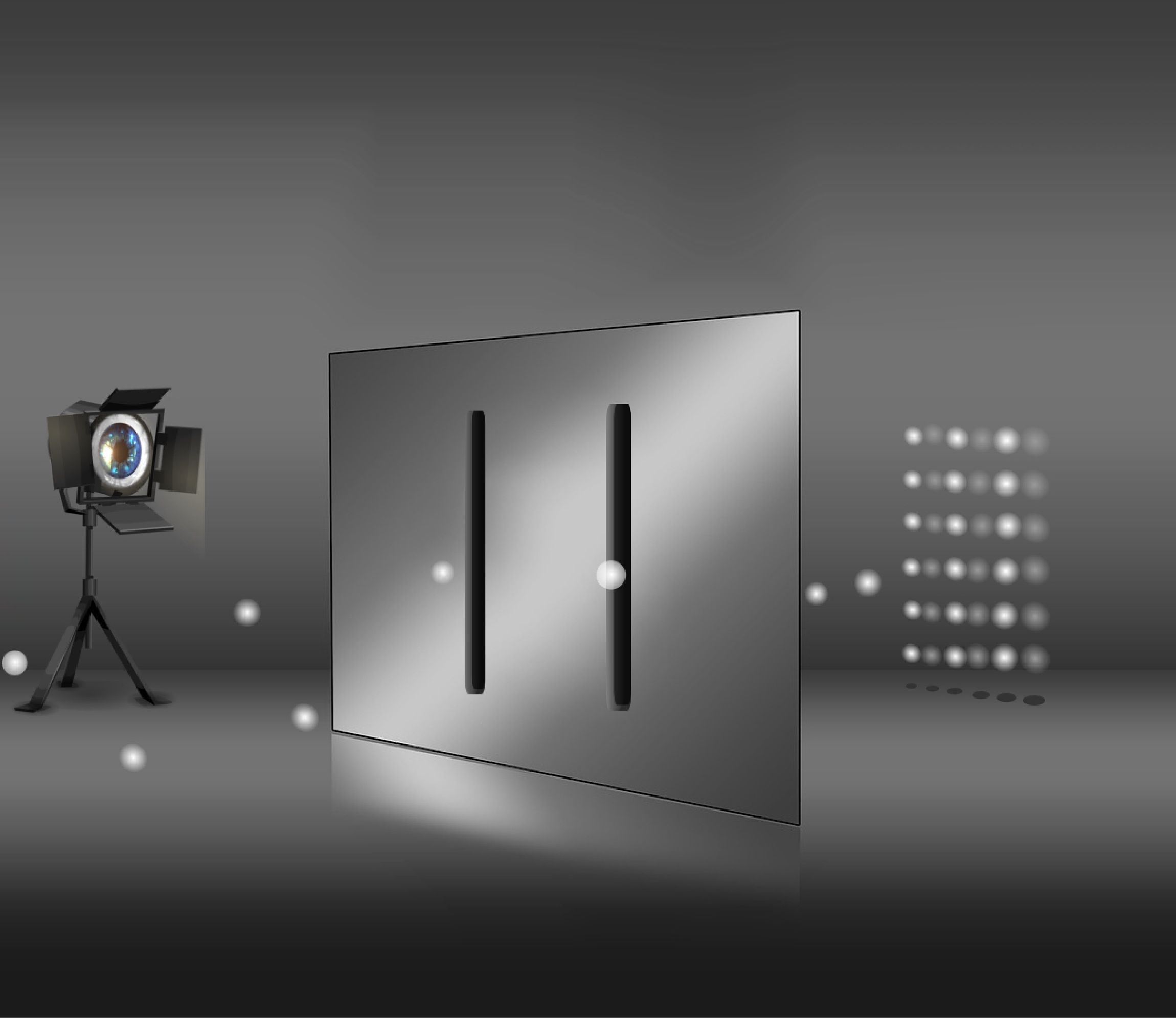
Stop Deleting the Observer. Measure It.
So what do we do with all this? My proposal is simple: bring the human back into the experiment, on purpose.
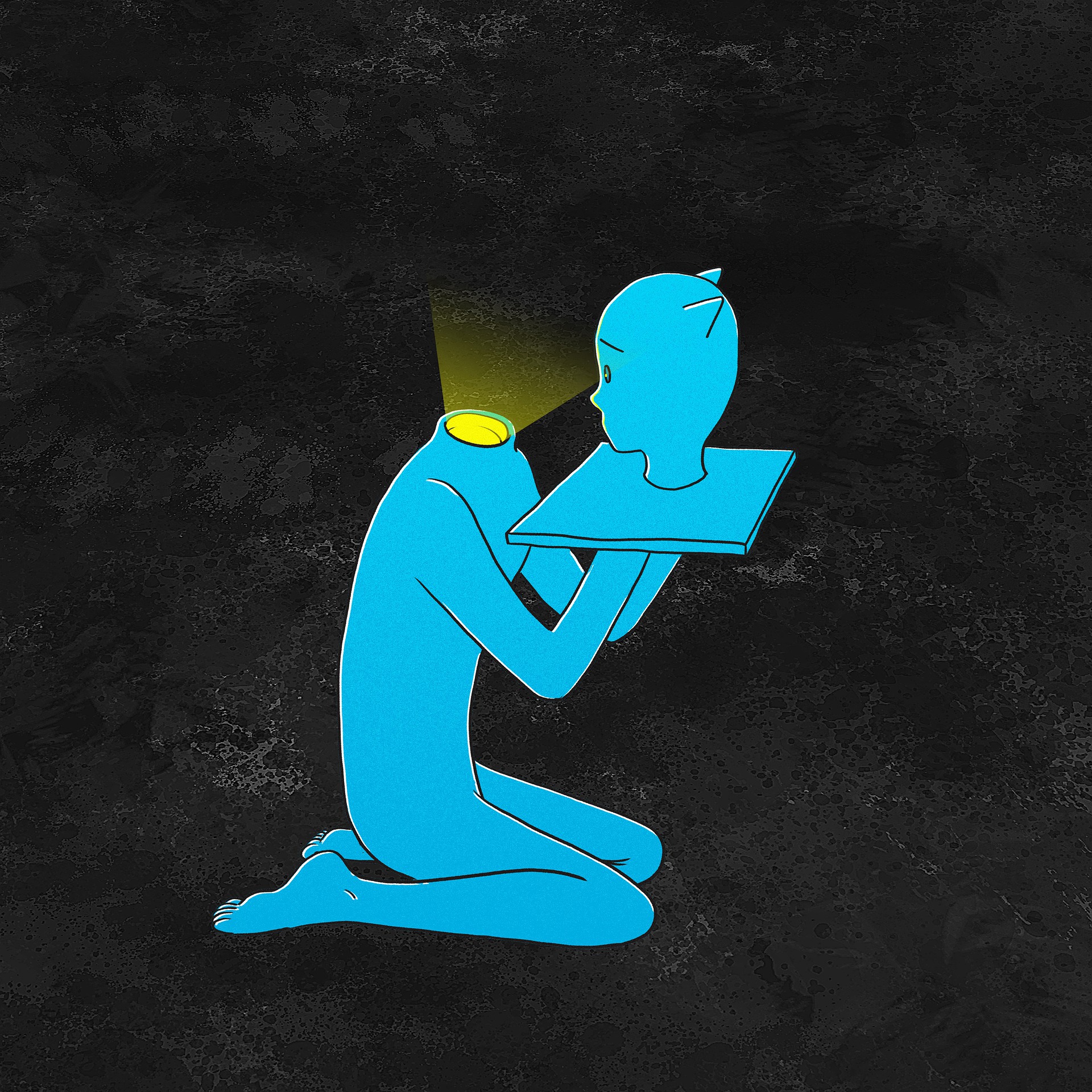
For 400 years the goal was to delete the human from the loop. That got us a long way. It gave us highly accurate data and some of the most important discoveries in history. But it's never fully possible, and some of today's biggest open questions make that harder to ignore. In quantum mechanics, what counts as an “observer,” and how to interpret measurement, is still debated nearly a century later. With AI advancing fast, we don't have a settled method for telling whether a system is sentient or just imitating sentience. These are problems where the observer is part of the question.
A better framework would account for the experimenter directly. Log who ran the session. Log what they believe. Have them predict the direction of the results in advance. From a larger view, that's simply more data, analyzed alongside the traditional results. The experimenter is part of the data already. We might as well stop pretending otherwise.
The observer will always be in the room, whether we admit it or not. Might as well take notes.
Related Concepts
- Observer-expectancy effect: the broader psychology term for a researcher's expectations influencing participants.
- Pygmalion (Rosenthal) effect: higher expectations leading to better performance, first studied in classrooms.
- Demand characteristics: cues in a study that tell participants what the researcher is hoping for.
- Placebo and nocebo effects: belief changing outcomes inside your own body.
- Psychokinesis: the proposed ability of the mind to influence physical systems directly.
- Experimenter psi: the parapsychology hypothesis that researchers may unconsciously contribute psi effects to their own studies.
FAQ
What is the experimenter effect?
The experimenter effect is when a researcher's expectations, beliefs, or behavior influence the results of their own study, usually without them realizing it. It's also called experimenter bias or the experimenter expectancy effect. Researchers reduce it with blinding, standardized procedures, and automated data collection.
What is an example of experimenter bias?
The best-known example is Rosenthal and Fode's 1963 rat study. Students told their rats were "maze-bright" got faster maze results than students told their identical rats were "maze-dull." The only real difference was what the experimenters believed.
How do researchers avoid experimenter bias?
The main tool is the double-blind design, where neither the participant nor the person running the session knows who is in which condition. Researchers also use scripted instructions, automated measurement, pre-registered hypotheses, and multiple independent experimenters.
What is the Clever Hans effect?
The Clever Hans effect is when an animal or person responds to unconscious cues from an observer rather than solving a task on their own. It's named after a horse in early-1900s Germany who appeared to do math, but was actually reading tiny changes in his questioners' posture and tension.
Can you actually feel someone staring at you?
The feeling of being stared at is very common, and researchers have tested it in controlled experiments that measure skin conductance while someone is watched remotely by video. Some studies have reported small positive effects and others have found nothing, including a 2006 collaborative study published in the British Journal of Psychology. It remains an open and debated question.
What did the Wiseman and Schlitz staring experiments find?
In joint studies from 1997 and 1999, participants tested by Marilyn Schlitz (a believer) showed significant responses to being stared at, while those tested by Richard Wiseman (a skeptic) did not. A tighter follow-up in 2006 found no effect for either researcher. The pattern is still debated as either a genuine experimenter effect or a chance finding.
Is the experimenter effect the same as the placebo effect?
They're closely related but not the same. The placebo effect is belief changing outcomes in your own body. The experimenter effect is a researcher's belief changing outcomes in a separate system, like a participant, an animal, or a dataset.
Does the placebo effect work if you know it's a placebo?
Some clinical trials of "open-label" placebos, where patients are told upfront they're taking an inactive pill, have reported symptom improvements. Research on why this happens is still early, but it suggests expectation and ritual may matter even without deception.
Summary
The experimenter effect is one of the most well-established problems in science. Clever Hans and Rosenthal's rats show that a researcher's expectations can shape results through subtle, ordinary channels, and blinding exists because of it. Parapsychology takes the problem to its edge. In the Wiseman and Schlitz staring studies, a believer and a skeptic ran the same protocol and got different results twice, before a tighter study found nothing at all. Skeptics and proponents can each explain that pattern in their own terms, and the data can't yet decide between them. That points to something we're not measuring. Rather than trying harder to delete the observer, science may learn more by recording them as part of the data.
Referenced Studies
The findings discussed in this article draw from the following publications.
Wiseman, R., & Schlitz, M. (1997)
Experimenter effects and the remote detection of staring. Journal of Parapsychology, 61(3), 197-208.
PsycNET recordWiseman, R., & Schlitz, M. (1999)
Experimenter effects and the remote detection of staring: An attempted replication. Proceedings of Presented Papers: The Parapsychological Association 42nd Annual Convention, 471-479.
Schlitz, M., Wiseman, R., Watt, C., & Radin, D. (2006)
Of two minds: Sceptic-proponent collaboration within parapsychology. British Journal of Psychology, 97(3), 313-322.
https://doi.org/10.1348/000712605X80704Rosenthal, R., & Fode, K. L. (1963)
The effect of experimenter bias on the performance of the albino rat. Behavioral Science, 8(3), 183-189.
https://doi.org/10.1002/bs.3830080302Pfungst, O. (1911)
Clever Hans (The Horse of Mr. von Osten). English translation of the 1907 German original
Daston, L., & Galison, P. (2007)
Objectivity. New York: Zone Books
Bacon, F. (1620)
Novum Organum.
Descartes, R. (1641)
Meditations on First Philosophy.
Palmer, J. (2017)
Experimenter effects in psi research. Psi Encyclopedia. Society for Psychical Research
https://psi-encyclopedia.spr.ac.uk/articles/experimenter-effects/